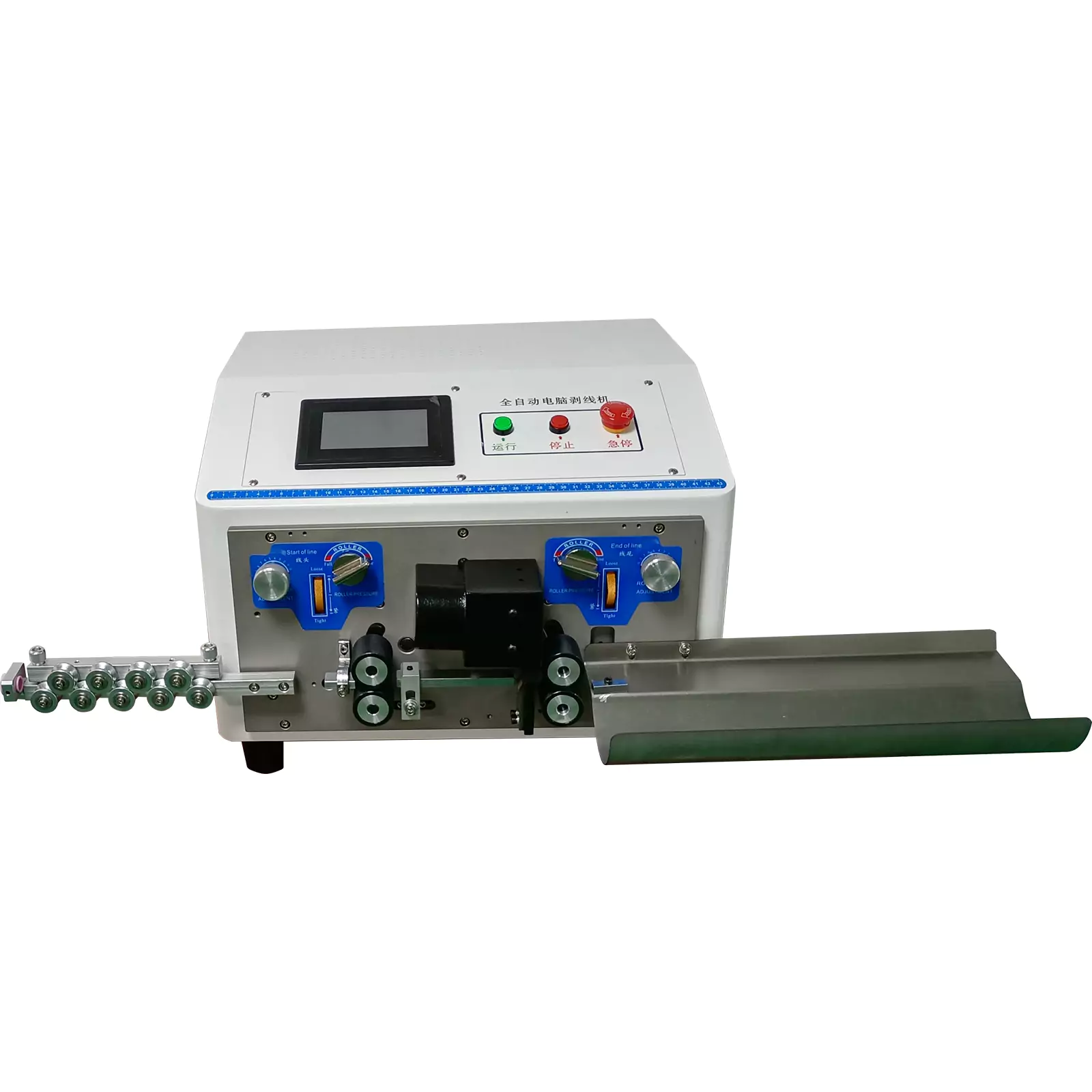
Experiencing problems with your automatic wire cutter and stripper? Many common issues can be quickly resolved with simple adjustments and maintenance. This guide will help you diagnose and fix the most frequent challenges, ensuring your machine operates efficiently.
Unstripped Wire Ends
If your machine isn't stripping wire ends properly, first examine the cutting depth. If the cut is too shallow, adjust the wire diameter setting to a larger value. Insufficient pressure from the feeding wheel can also be a culprit; in this case, increase the air pressure. Don't forget to clean the feeding wheel thoroughly, as accumulated dirt can hinder its grip. Finally, review your retraction parameters—they might be set incorrectly (either too large or too small), and always confirm normal air supply to the machine.
Issues with Stripping Wire Tails
Similar to wire ends, unstripped tails often point to a shallow cutting depth. Try decreasing the wire diameter parameter slightly. A loose wire clamp can prevent proper stripping; if this is the case, increase the air pressure to the clamp. As with wire ends, check the retraction parameters and ensure a consistent air supply.
Addressing Wire Damage
If you notice severe damage to your wires, identify whether the pressure marks originate from the feeding wheel or the stripping clamp. Once determined, reduce the corresponding air pressure to alleviate the stress on the wire.
Cutting into Wire Cores
When the machine cuts into the wire cores during end stripping, the wire diameter value is likely too low. Gradually increase this parameter until the cores are no longer damaged.
Inconsistent Lengths (Actual Length ≥ Set Length)
Varying wire lengths, particularly when the actual length is longer than the set length, often stem from issues with the feeding mechanism. This could be due to insufficient pressure from the feeding wheel, dirty feeding wheels requiring cleaning, or an excessive gap between the feeding wheels. Adjusting the air pressure might help. Also, check for excessive pressure from the straightener causing wire pulling, or a stuck wire reel. Inconsistent wire thickness can also contribute to this problem.
Wire Ends or Tails Cut Off Entirely
If wire ends and tails are being completely cut off, the wire diameter setting is probably too small. Adjust this parameter accordingly to prevent unintended cuts. Occasionally, this issue might occur intermittently; if so, simply increase the wire diameter value slightly.
Wires Occasionally Not Cut
When wires sometimes remain connected after processing, consider a few possibilities. The wires might exceed the machine's specified range. For thicker wires, the stripping speed might be too fast, requiring a reduction. Finally, ensure the tools are adequately lubricated, and check if the blades are dull, needing either replacement or sharpening.
Wire Clamp Issues
If the wire clamp struggles to hold wires or wire ends collide with the clamp, you'll need to adjust the wire guide plate. Alternatively, replace it with a guide tube that better matches the wire's diameter.
For more in-depth technical resources and solutions for your automatic wire cutter and stripper, please visit our specialized support page.
评论
发表评论