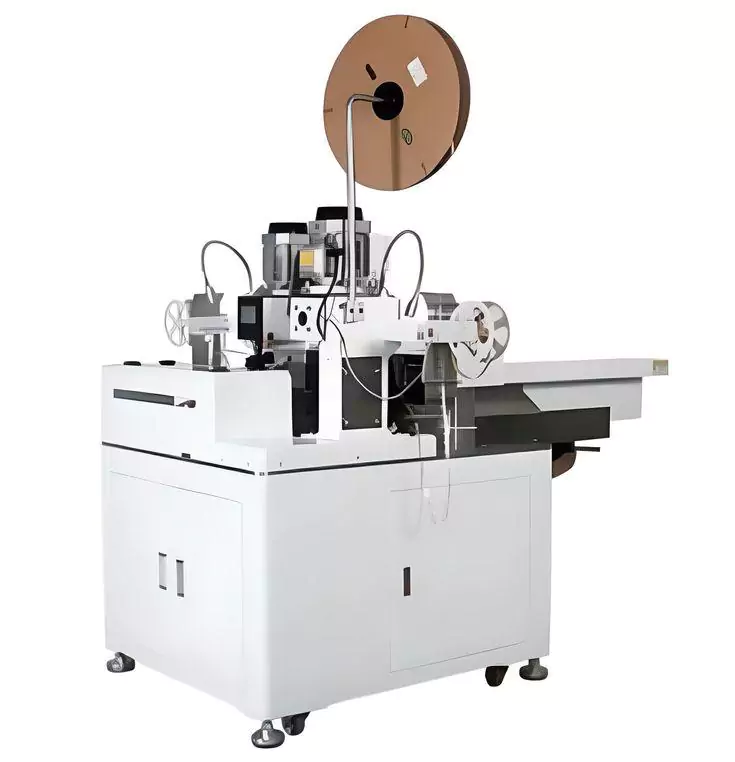
Investing in superior manufacturing equipment isn't just about boosting profits and reducing labor costs; it's also about enhancing a company's reputation, fostering industry recognition, and solidifying customer loyalty while attracting new clients. Automatic wire crimping machines, sometimes referred to as automatic wire stripping and crimping machines, integrate essential functions like wire feeding, cutting, and crimping. These machines often work in tandem with specialized wire dereelers: those designed for terminal machines are paired with crimping units, while others, suited for automatic computer wire strippers or ribbon wire stripping machines, ensure smooth and rapid wire delivery. Therefore, choosing a high-quality automatic terminal crimping machine is pivotal for operational success.
Assessing Automatic Crimping Machine Performance
Automatic terminal crimping machines are indispensable in electrical manufacturing, ensuring robust connections between terminals and wires. This guide offers a structured approach to evaluating their performance, focusing on three core areas: crimping quality, wire processing precision, and operational efficiency. Adhering to these evaluation methods will help ensure your machine not only meets production demands but also upholds safety standards.
1. Evaluating Crimping Quality
The ultimate measure of a crimping machine's excellence lies in its ability to consistently produce flawless terminal connections.
Terminal Crimp Integrity: Inspect crimped samples for proper terminal alignment (no skewing or misalignment), wire retention (secure crimp onto the conductor), and connection tightness (absence of loose interfaces). Poor crimping can lead to significant product failures and compromise entire electrical systems.
Crimp Cross-Section Analysis: For in-depth evaluation, prepare sample crimps using standard wire gauges and then section them for microscopic examination. Verify proper compression of wire strands, complete insulation grip, and the absence of conductor damage.
2. Assessing Wire Processing Performance
Examine the machine's capabilities in preparing wires for crimping.
Stripping Quality: Ensure 100% insulation removal at designated points, consistent stripping positions relative to terminal ends, no nicks or damage to copper strands, and no scratches or compression marks on the remaining insulation. Length consistency should be within a tolerance of $0.2 \text{mm} + (\text{set length} \times 0.002 \text{mm})$.
Cutting Performance: Evaluate the cutting mechanism for 90-degree perpendicular cuts (squareness of cut ends), minimal to no burr formation, and the wire's straightness (no bending or kinking).
3. Analyzing Operational Efficiency
When quality parameters are met, prioritize efficiency.
Processing Speed: Focus on Cycles Per Minute (CPM) for higher throughput. Consider changeover time for quick adjustments between wire/terminal types and uptime percentage for continuous reliability. Remember to always balance speed with quality; faster processing must not compromise crimp integrity.
Automation Level: Assess the feed system reliability for consistent wire and terminal presentation. Look for vision systems that enable automated quality inspection and error recovery features like automatic jam detection and clearing.
4. Critical Safety Protocols
Adhering to safety is paramount.
Emergency Procedures: In case of malfunctions, immediately activate the emergency stop button. Only qualified technicians should debug the machine, and always implement lockout/tagout procedures before any maintenance.
Operational Safety: Strictly enforce safety perimeters to ensure no body parts enter danger zones. Use designated tools like tweezers or scissors for proper jam clearing, and disconnect power for all component changes.
Preventive Maintenance: Implement a schedule for regular die inspection (checking for wear or damage), follow manufacturer guidelines for lubrication, and ensure sensor calibration for proper detection functionality.
5. Troubleshooting and Optimization
Common Issues: Skewed terminals often indicate misaligned dies (realign them). Incomplete crimps typically point to insufficient pressure (adjust crimp force). Wire damage might be due to improper stripping depth (recalibrate stripping blades). Inconsistent lengths can signal a feed mechanism issue (clean/tighten the feed system).
Performance Optimization: Maintain detailed machine logs to identify patterns. Establish regular quality audit intervals and keep a spare parts inventory for critical components.
Conclusion: A Holistic Evaluation
To ensure optimal automatic terminal crimping machine performance:
Prioritize Crimp Quality: Conduct regular pull tests and visual inspections.
Monitor Processing Accuracy: Implement statistical process control for wire preparation.
Balance Speed and Reliability: Never sacrifice quality for throughput.
Enforce Safety Rigorously: Protect operators while maintaining productivity.
By implementing this comprehensive evaluation framework, manufacturers can sustain high-quality terminal connections, maximize equipment productivity, and ensure a safe workplace. Regular performance audits combined with preventive maintenance will extend machine life and guarantee consistent output quality.
For in-depth technical resources on automatic terminal crimping machines, visit our specialized page.
评论
发表评论