跳至主要内容

Mastering Wire Preparation: Your Guide to the Manual Copper Stripping Machine


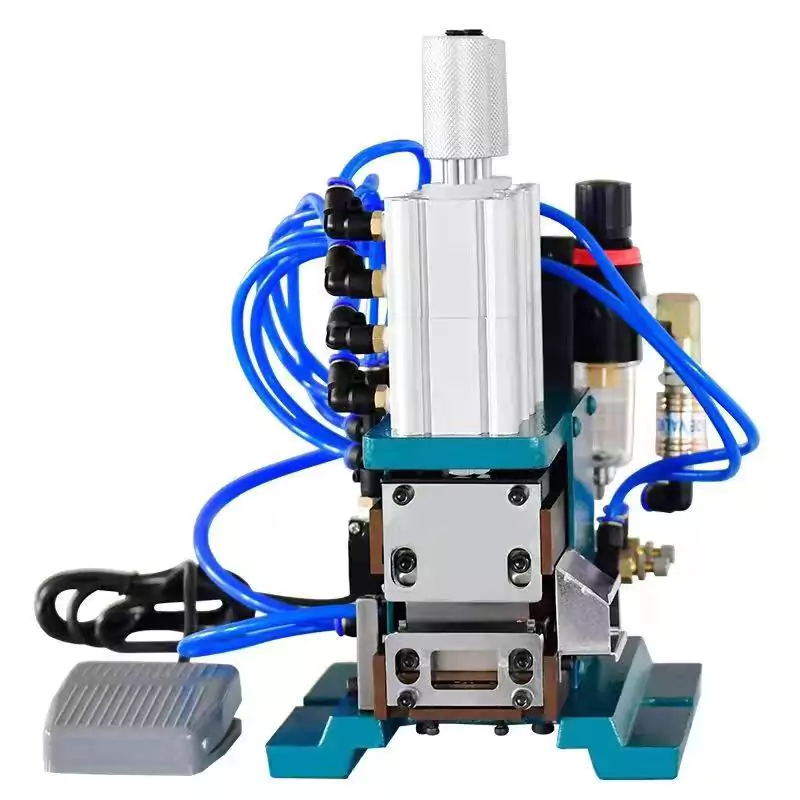
Tangled wires can quickly derail any project, but the manual copper wire stripping machine offers a compact and precise solution to this common problem. This tabletop powerhouse puts you in control of your wire processing, making quick work of even complex tasks.

Getting Started: Setup and Power

Before you begin, ensure your machine is properly set up. Connect the air supply hose to a reliable source, ideally providing 4.5-7 kg/cm² of pressure, such as a mini air compressor. Next, plug the unit into a standard 220V power outlet. With these simple steps, your stripping companion is ready for action.

Hands-On Control: Operating the Machine

Unlike fully automated systems, this manual machine thrives on your direct input. The foot switch is your primary control. A gentle press activates the internal cylinder, which is the core mechanism, giving you precise command over each stripping cycle.

Alibrating for Perfection: Adjusting for Wire Size

Optimizing the machine for different wire gauges is essential for clean, efficient stripping. Locate the headless screw, which governs the position of the upper clamp block and the movement of the stripping blade. By loosening the nut on this screw, you can adjust the gap between the components. Thicker wires will require a wider gap for proper stripping, while thinner wires need a tighter setting to ensure a clean cut without damage.

Achieving Precision: Stroke and Speed

Once you've set the ideal gap, secure the headless screw firmly in place. Use the main cylinder to feed the wire, fine-tuning the stroke length with the adjustment screw. If you need to modify the stripping speed, simply adjust the regulating valves – it's as straightforward as changing gears on a bicycle.

Enhanced Efficiency: Dual-Cutter Models

For increased productivity, consider a double-cutter model. These machines can simultaneously cut and strip wires, effectively doubling your efficiency. The calibration steps remain the same to ensure optimal performance.

Attention to Detail: Fine-Tuning Your Strips

True mastery lies in the details. Always maintain a 1.5mm gap between the cutter and the stripping blade to prevent wire damage. An overly wide gap can lead to uneven stripping. Pay attention to the gaskets as well; they dictate the stripping length. Adjust their thickness to achieve precise control over how much insulation is removed.

A Versatile and Cost-Effective Solution

The manual copper wire stripping machine is incredibly versatile. It handles multi-core cables with ease and effectively strips both sheath and shield wires. This cost-effective solution is not only precise but also energy-efficient. By incorporating this robust tabletop tool into your workflow, you'll gain unparalleled control and efficiency in all your wire processing endeavors.


评论

此博客中的热门博文

Troubleshooting Common Automatic Wire Cutter and Stripper Issues

Experiencing problems with your automatic wire cutter and stripper ? Many common issues can be quickly resolved with simple adjustments and maintenance. This guide will help you diagnose and fix the most frequent challenges, ensuring your machine operates efficiently. Unstripped Wire Ends If your machine isn't stripping wire ends properly, first examine the cutting depth. If the cut is too shallow, adjust the wire diameter setting to a larger value. Insufficient pressure from the feeding wheel can also be a culprit; in this case, increase the air pressure. Don't forget to clean the feeding wheel thoroughly, as accumulated dirt can hinder its grip. Finally, review your retraction parameters—they might be set incorrectly (either too large or too small), and always confirm normal air supply to the machine. Issues with Stripping Wire Tails Similar to wire ends, unstripped tails often point to a shallow cutting depth. Try decreasing the wire diameter parameter slightly. A loose wire...

Unveiling Excellence: The Apex of Precision in Tubing Cutting

Welcome to a new era of engineering where innovation meets superior performance. Our tubing cutting machines are not just tools; they redefine the art of tube manipulation, offering unmatched accuracy and efficiency. Prepare to explore the pinnacle of cutting technology. Precision, Elevated Whether you're working with shrink tubing or sensitive medical materials, our machines establish a new benchmark for precision. Experience consistently clean, flawless cuts every time, ensuring your materials are handled with the greatest care. Bid farewell to uneven edges and embrace a new standard of excellence in your operations. Seamless Efficiency and Advanced Capabilities Designed with advanced features, our tubing cutters are built to streamline your entire workflow. They boast adjustable cutting speeds, versatile peripheral integration, and impeccable cut-to-length accuracy. These capabilities empower you to achieve exceptional results across diverse applications. From intricate medica...

Troubleshooting Line Setting Issues in Your Multi-Core Wire Stripper & Crimper

  Your multi-core wire stripper and crimper is a valuable asset, designed to streamline wire processing. However, it can be frustrating when the machine only performs the initial line setting action without completing the full stripping and crimping process. This guide explores the potential reasons for this problem and offers solutions to get your machine back to optimal performance. Understanding Why Only Setting Occurs Several factors can cause your machine to clamp the wire but then fail to strip and crimp: Power Supply Instability: An inconsistent or insufficient power supply can disrupt machine operations. This might be due to a loose or damaged power cable causing voltage fluctuations. Sensor Malfunctions: Faulty sensors are critical culprits. A loose or damaged sensor connection, or even incorrect sensor positioning, can send inaccurate signals to the machine's controller, leading to incomplete actions. Motor Problems: If the motor responsible for stripping and crimping is...