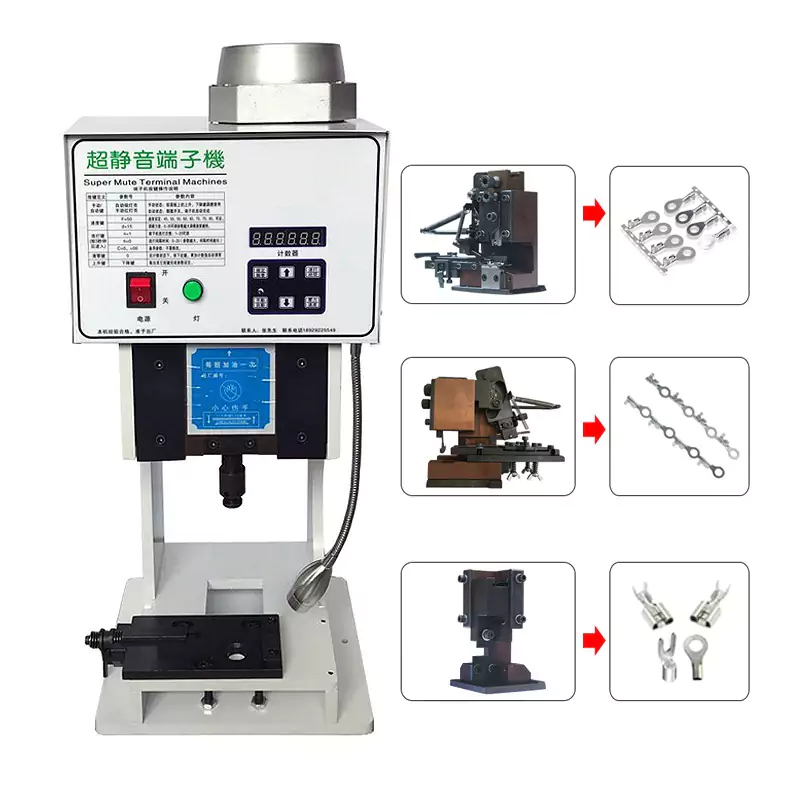
Terminal crimping machines are crucial for many manufacturing processes, and keeping them running smoothly is essential. When issues arise, quick and effective troubleshooting can prevent costly downtime. Here’s a guide to fixing common problems you might encounter:
Stripping Problems
If your terminal crimping machine isn't stripping wires, start by verifying the stripping cutter values and checking if the stripping coupler is working correctly. These steps alone resolve over 90% of stripping issues. Remember, stripping is a core function; if it fails, your entire production line stops.
Machine Won't Start
Should your crimping machine fail to start, check if the stroke has reached its highest point or if there's any obstruction in the line slot. These checks are highly effective, often fixing the problem entirely. A machine that won't start directly impacts your order fulfillment, causing significant delays.
Excssive Noise
While some noise is normal, excessive sound from your crimping machine signals a problem. Inspect components for wear and tear, which can increase friction. Also, look for any loose screws that might cause increased vibration. Addressing these can eliminate the noise, improving worker comfort and preventing potential hearing damage.
Wire Clamp Issues
If the wire clamp isn't holding the wire properly, try increasing its air pressure. This simple adjustment is effective in about 90% of cases. The wire clamp is vital for consistent wire feeding; its failure can lead to widespread wiring defects throughout your production.
Vacuum Suction Device Not Working
When the vacuum suction device at both ends isn't functioning, check if the semi-stripping parameter is greater than the length of the wire end. This common oversight is responsible for almost all such failures. A non-functional vacuum suction device, critical for semi-stripping, will cause further order delays.
Line Feeding Deviation Alarm
A line feeding deviation alarm often means the straightening wheel is too tight or the encoder is damaged. These are common culprits, and fixing them resolves the alarm in 90% of instances. Ignoring this alarm can quickly lead to wiring faults.
Double Crimping
If your terminal crimping machine is double crimping, examine the switches near the main shaft for damage or loose screws. Also, check the circuit board and foot pedal for defects. Finally, inspect the selector spring for displacement or breakage, and assess if the selector itself is damaged. These steps are highly effective in resolving double crimping, a serious issue that can bring your entire production to a halt.
For more expert technical resources on terminal crimping machines, explore our specialized page.
评论
发表评论